Biophilic Design for Leeds Homes: Bringing the Dales Indoors
Discover how biophilic design in Leeds can transform your home with natural materials, warm light and living textures. Book a free discovery call with A+ Interiors.

Bringing the Dales Indoors: Biophilic Design in Leeds
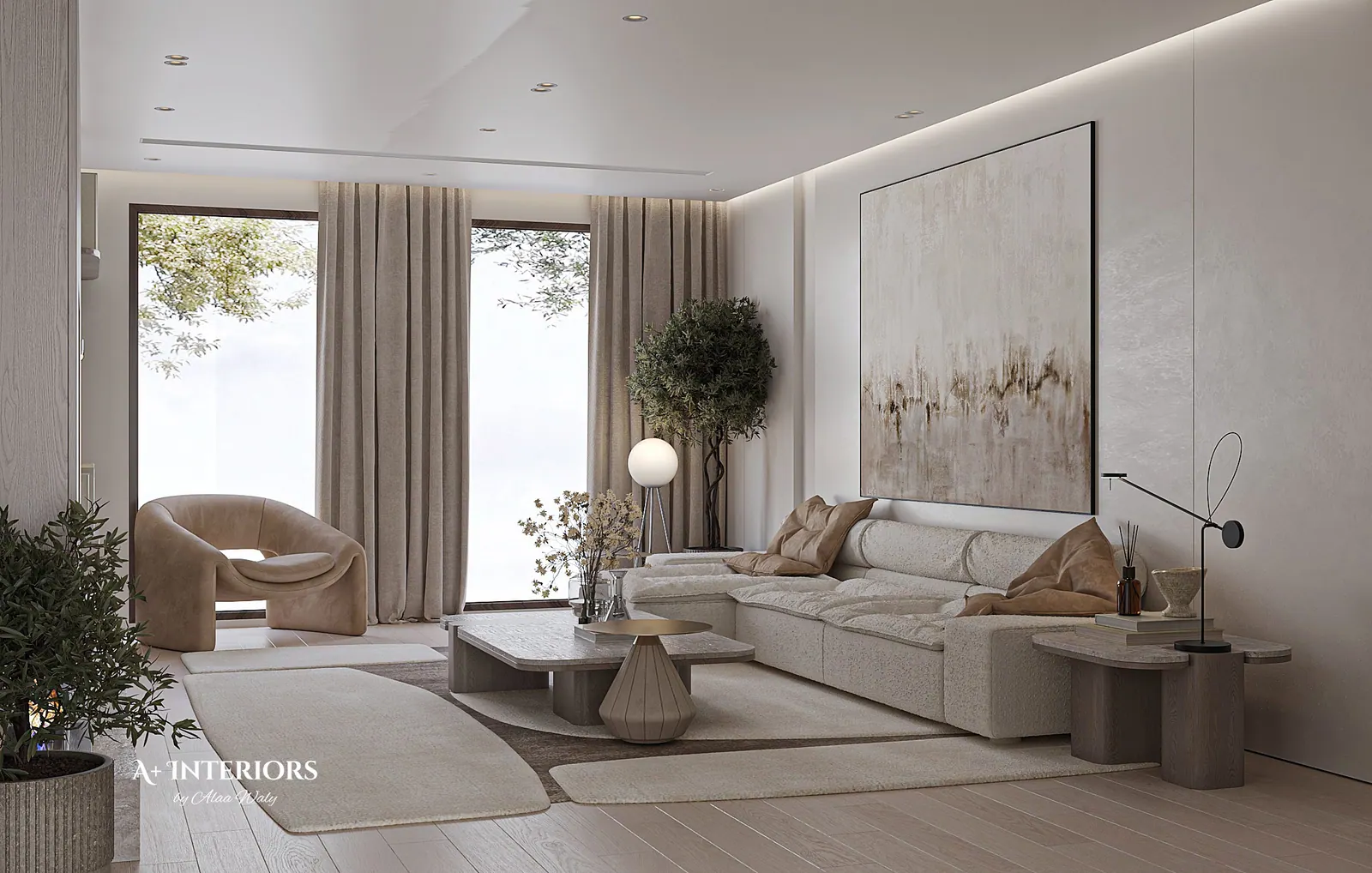
Step outside Leeds on a clear morning and within twenty minutes you are in the Dales, watching light move across limestone walls and moorland. That quality of calm is something a lot of Leeds homeowners are now asking us to bring back inside with them. It is not a trend, exactly. It is more of a recognition that the grey-and-white interiors many of us lived with for a decade simply did not feel very restful.
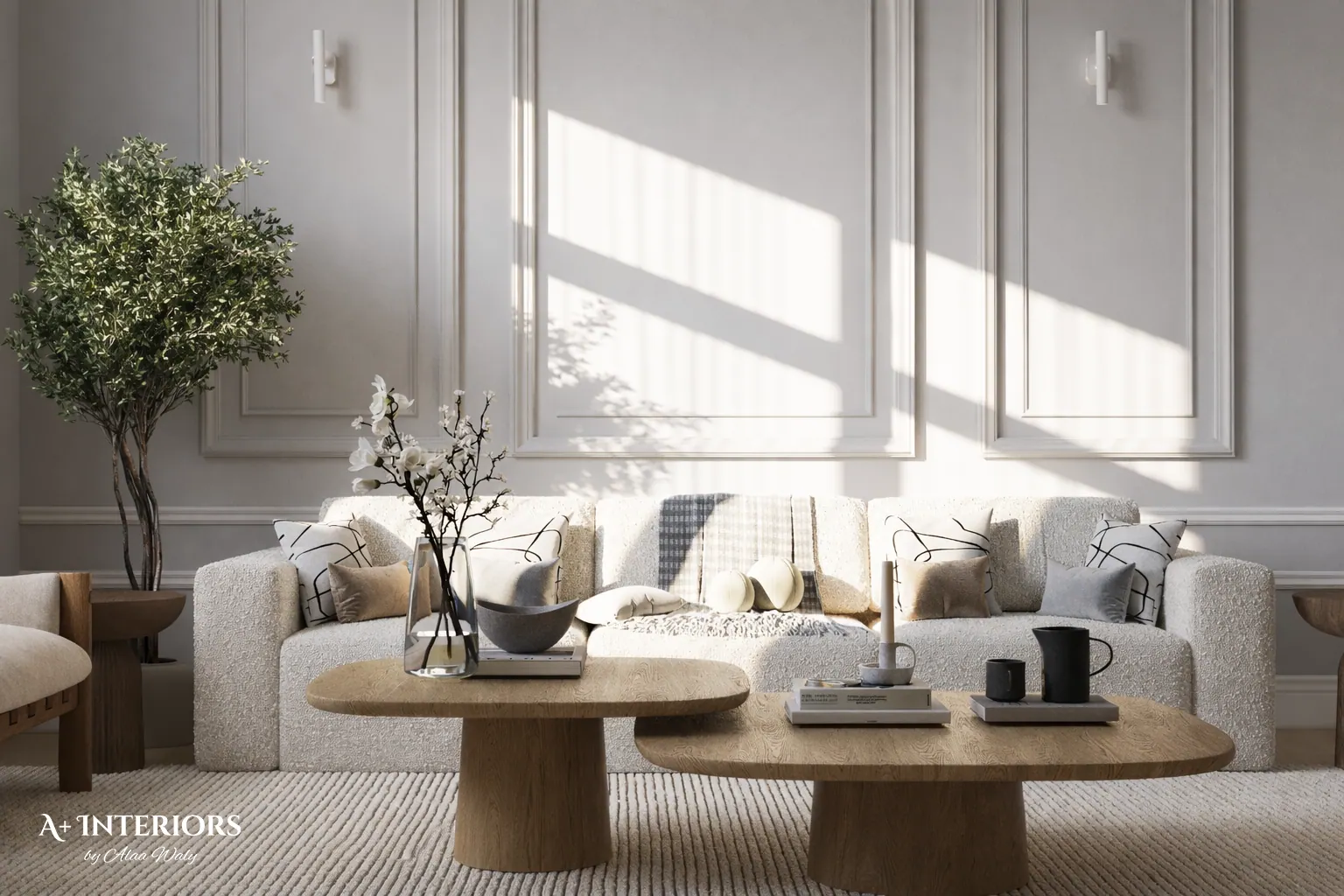
Biophilic design is the practice of connecting a home to the natural world through materials, light, texture, plant life and colour. Done well, it does not look like a botanical garden or a spa brochure. It looks like a home that happens to feel genuinely good to be in.
We are a wellness-led interior design studio based in Leeds, and this is one of the things we think about most carefully in every project we take on.
What Biophilic Design Actually Means for a Leeds Home
The word sounds academic. The idea is straightforward. Humans are wired to respond to nature: to wood grain, to stone, to the movement of plants, to natural light shifting through a room across the day. When a home is built from synthetic materials, sealed with high-VOC finishes and lit entirely by artificial light, it can feel relentless, even when it is tidy and well-furnished.
Biophilic design in Leeds homes tends to mean a few specific things in practice:
- Natural materials over synthetic ones. Solid timber floors, linen and wool textiles, stone worktops, clay plasters, rattan and jute. Materials that age gracefully and feel honest underfoot and underhand.
- Low-VOC and breathable finishes. We always recommend checking manufacturers' data sheets carefully and favouring paints, oils and varnishes that allow walls and floors to breathe. This is not just about air quality in principle; it affects how a room smells and how it feels to spend time in.
- Colour drawn from the landscape. Muted greens, warm ochres, terracottas, chocolate browns, soft stone whites. The palette of the Yorkshire countryside rather than the palette of a show home.
- Light, considered carefully. Where natural light comes in, how it moves, what it falls on. In Leeds's Victorian terraces, where north-facing back rooms can feel dark by mid-afternoon, this matters enormously.
- Living elements. Plants, yes, but also the texture of bark, the grain of timber, the irregularity of hand-thrown ceramics. Anything that reminds the eye and the nervous system that it is not in a warehouse.
Why This Matters Particularly in Leeds
Leeds is a city of Victorian terraces, Edwardian semis and mid-century council-era housing, with a growing layer of city-centre apartments and new builds. Most of these homes were built with natural materials: brick, stone, timber, lime plaster. The bones are good. What often happens in renovation is that those materials get covered over in the name of modernisation, and something is lost.
In areas like Chapel Allerton, Headingley, Roundhay and Meanwood, we often work with homes that have original features worth celebrating: deep skirting boards, ceiling roses, bay windows that flood a front room with morning light. Biophilic design in these contexts is less about adding nature and more about uncovering what was already there, and layering it thoughtfully.
In newer developments, particularly city-centre apartments in the LS1 and LS2 postcodes, the starting point is different. There may be good light and generous proportions, but the finishes are often flat, synthetic and characterless. Here, biophilic design means introducing warmth and texture from scratch: a limewash wall, a timber shelving run, a wool rug, a considered collection of plants at different heights.
The common thread is this: whatever the building, whatever the neighbourhood, Leeds homes feel better when they are connected to something natural.
The Colours That Work
One of the questions we hear most often is whether richer, earthier colours will make a small terrace feel gloomy. It is a fair concern. The answer depends almost entirely on finish and light.
A deep terracotta in a flat emulsion on a north-facing wall can feel heavy. The same terracotta in a limewash finish, which reflects light differently at different times of day, can feel alive. A chocolate brown in a gloss is oppressive. In a chalky, low-sheen paint with warm lighting, it is grounding and comfortable.
Colours we find ourselves returning to for Leeds homes:
- Warm stone whites and off-whites that read as neutral but have life to them
- Sage and olive greens that reference Yorkshire hedgerows and moss
- Terracotta and rust tones that echo the brick of the city itself
- Soft ochres and honey tones that work with timber and natural light
- Deep, earthy browns for a room you want to feel like a retreat
None of these are difficult colours. They just need to be chosen in relation to the specific light in a specific room, which is one of the reasons an in-home consultation is so useful before committing to anything.
Natural Materials: What to Prioritise and Where
Not every room needs a full material overhaul. Often, the most effective biophilic interventions are layered in gradually.
Floors are the single highest-impact surface. Solid timber, engineered oak or natural stone underfoot changes how a room sounds, feels and smells. In a Leeds terrace with original floorboards, sanding and oiling them rather than covering them with carpet or luxury vinyl is almost always the right call.
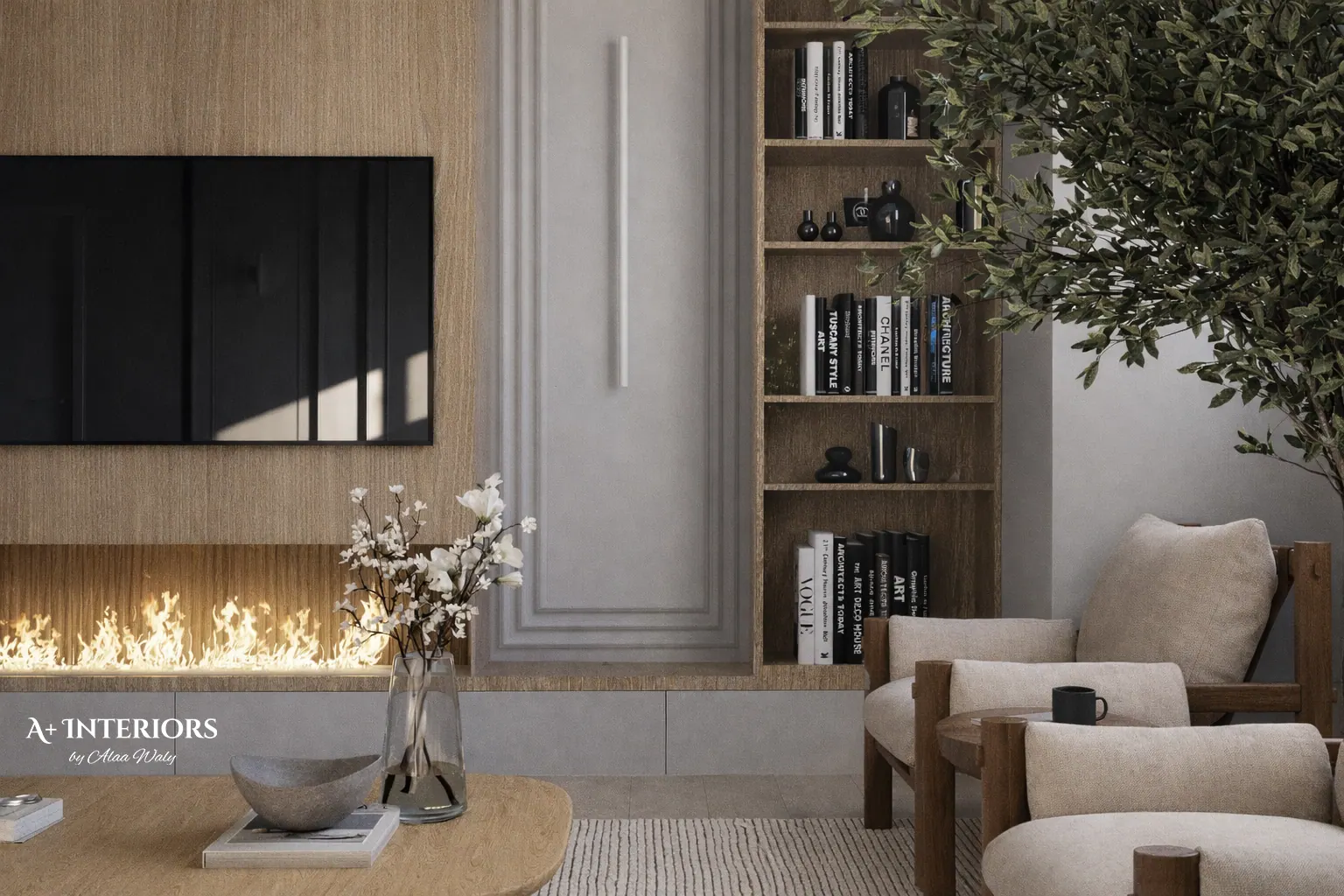
Walls are the largest visual surface. A clay plaster or a limewash paint adds texture and movement that flat emulsion simply cannot. It does not have to be the whole room: a single chimney breast treated differently from the surrounding walls can anchor a living room beautifully.
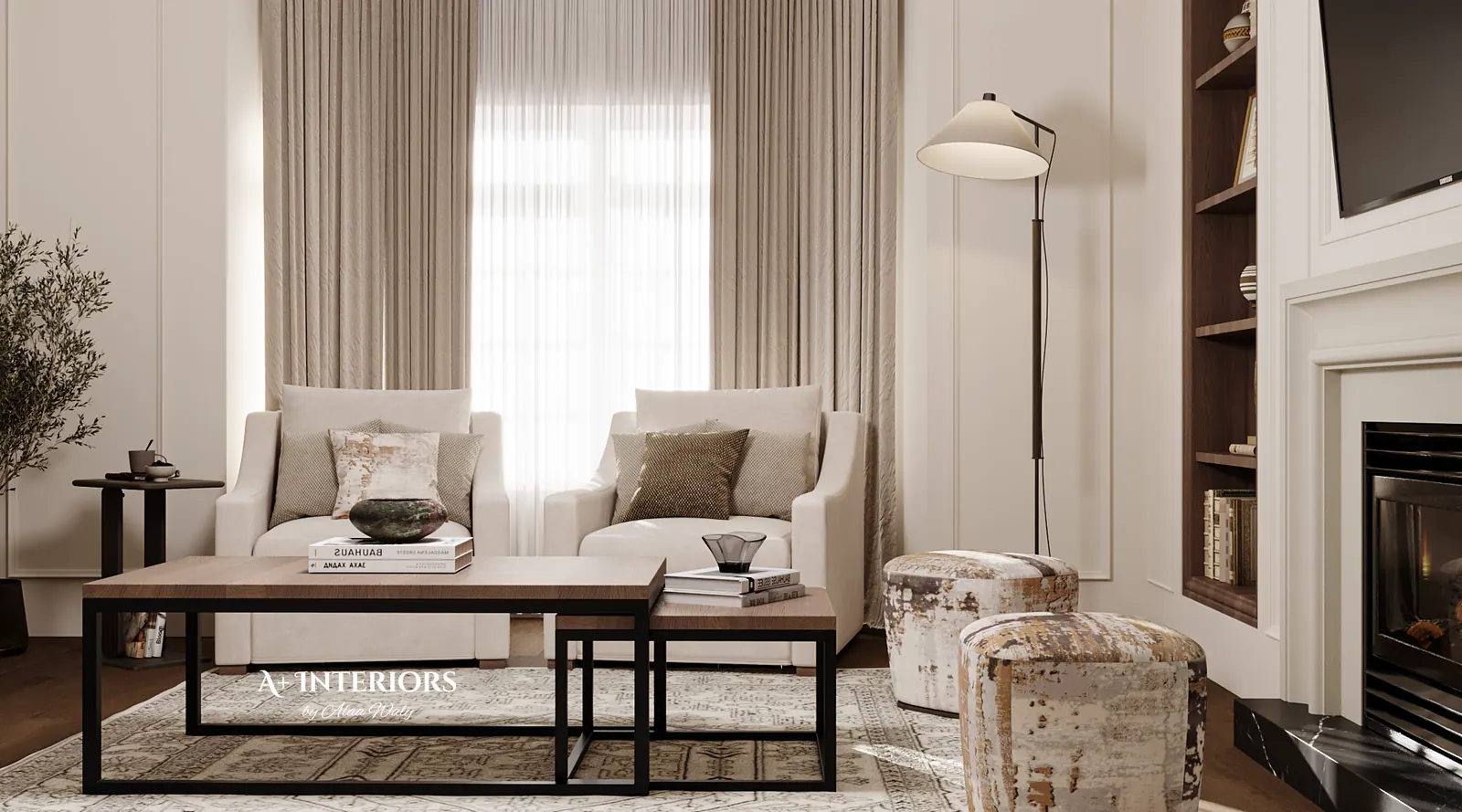
Textiles are the quickest win. Swapping synthetic cushion covers and curtains for linen, cotton or wool changes the sensory quality of a room immediately. Heavy linen curtains in a bedroom, for instance, do something for sleep quality that polyester blackout curtains cannot quite match, even at the same light-blocking level.
Plants deserve more thought than they usually get. A single large specimen, a fiddle-leaf fig or a mature olive tree in a generous pot, makes more impact than a collection of small plants on a windowsill. Height, scale and placement matter.
Biophilic Design for Wellbeing, Not Just Aesthetics
We are careful not to make clinical claims about what interior design can do for health. What we can say, honestly, is that the homes we design with natural materials, considered light and a connection to the outside world tend to feel noticeably different to be in. Quieter. Easier. Less like somewhere you are always slightly on edge.
For families in Leeds who are renovating a home around children, or professionals working from home who need a space that does not deplete them, or anyone who has simply noticed that their current home does not feel restful, this approach is worth taking seriously.
Our services range from a full interior design project, where we handle everything from concept to completion, to the Calm Room Design Package, which is a single-room remote design service available to homeowners anywhere in the UK. We also offer in-home consultations across Leeds and West Yorkshire, and online consultations for those further afield. Every project starts with a free discovery call.
Frequently Asked Questions About Biophilic Design
What is biophilic design and how does it differ from just having houseplants?
Biophilic design is a whole-room approach that considers materials, light, colour, texture, layout and living elements together. Plants are one part of it, but the principle runs much deeper: it is about choosing materials that come from or reference the natural world, letting in as much natural light as possible, and creating spaces that feel grounded rather than synthetic. A room with a single well-placed plant, a timber floor, a limewash wall and good natural light will feel more connected to nature than a room full of houseplants on a vinyl floor under strip lighting.
Does biophilic design work in a small Victorian terrace?
Yes, and in some ways it suits the terrace form particularly well. Original floorboards, brick fireplaces, bay windows and lime plaster walls are all naturally biophilic materials. The work is often about restoring and celebrating what is already there, rather than starting from scratch. Careful colour choices and considered lighting can make a compact room feel calm and generous rather than dark or cramped.
Can I work with you if I am not in Leeds?
Yes. Our in-home consultations are available throughout Leeds and West Yorkshire. For homeowners elsewhere in the UK, we offer online consultations and the Calm Room Design Package, which delivers a full single-room design remotely. The process is the same: we get to understand the room, the light, how you live in it, and what you want it to feel like.
How do I get started?
The easiest first step is a free discovery call. It is a short, no-pressure conversation where we listen to what you are hoping for, explain how we work and work out which of our services fits your project. There is no obligation, and it usually gives people a much clearer sense of what is possible.
If you are thinking about bringing more calm, warmth and connection to the natural world into your Leeds home, we would love to hear about it. Get in touch and book your free discovery call.